Pakfitnesstips.blogspot.com

You can make your body good and healthy through our tips

Pakfitnesstips.blogspot.com

You can make your body good and healthy through our tips

Pakfitnesstips.blogspot.com

You can make your body good and healthy through our tips

Pakfitnesstips.blogspot.com

You can make your body good and healthy through our tips

Pakfitnesstips.blogspot.com

You can make your body good and healthy through our tips

13 Jan 2014

Everyone Deserves Clean Water.


Everyone Deserves Clean Water.


Everyone Deserves Clean Water.

Water. For most of us it’s something we take for granted every day. We turn on a faucet and have access to clean water in an instant. But did you know that for many people in the world, clean water is extremely hard to get?
Consider the facts:


  • Diseases from unsafe water and lack of basic sanitation kill more people every year than all forms of violence, including war.
  • Children are especially vulnerable, as their bodies aren’t strong enough to fight diarrhea, dysentery and other illnesses.
  • 90% of the 30,000 deaths that occur every week from unsafe water and unhygienic living conditions are in children under five years old.
  • The WHO reports that over 3.6% of the global disease burden can be prevented simply by improving water supply, sanitation, and hygiene. (source)
The good news is that we can do something to help.

This holiday season, give the gift of clean water.

Village Green Network has teamed up with charity:water to raise money to supply water for families in Cambodia. Our goal is to raise $50,000 for these families by December 31st. This would provide water to over 500 families. We want to bring water to as many families as possible.
Please take a minute and click here to donate NOW.
Donate whatever you can. Every little bit helps.
Learn more by watching this short 3 minute video:

Please share this post on Facebook, Pinterest and Google+ to help spread the word!

Give the gift of clean water this holiday season. Learn more at www.thankyourbody.com.

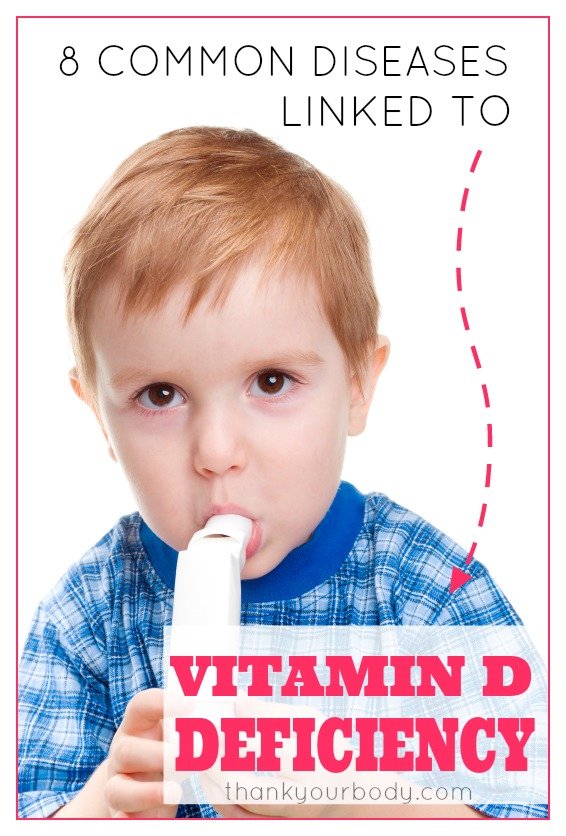
Eight common diseases linked to vitamin D deficiency


Eight common diseases linked to vitamin D deficiency

Eight common diseases linked to vitamin D deficiency

The cure for some of the most common and debilitating health conditions today may be as elemental as simply correcting a nutrient deficiency that plagues millions of Westerners: Vitamin D deficiency. Here are eight common diseases that have been scientifically linked to a chronic lack of vitamin D:
1) Asthma. Though a definitive cause of asthma is still up for debate, recent science points to vitamin D, and particularly a lack thereof, as a major factor in its prevalence. Especially in children, vitamin D has been shown to help reduce the severity and prevalence of asthma symptoms, and may help quell the inflammation responsible for restricting airways and making it difficult for asthmatics to breathe (http://science.naturalnews.com).
2) Hypertension. A study recently published in the Journal of Investigative Medicine found that patients with hypertension fared better when their vitamin D levels were boosted. High blood serum levels of 25-hydroxyvitamin D (25(OH)D), a marker of vitamin D, were found to help modulate vascular inflammation and other indicators of high blood pressure (http://www.vitasearch.com).
3) Inflammatory Bowel Disease (IBD). Numerous studies conducted in Europe, India, and the United States have identified a link between low vitamin D levels and higher rates of Crohn’s disease, ulcerative colitis, and other forms of IBD. Based on this cohort of research, populations where natural sunlight exposure is limited tend to have higher rates of IBD, and vice versa (http://www.vitamindcouncil.org).
4) Influenza. It has long been known that influenza rates are highest during the wintertime when the sun is at its lowest tilt, and exposure to ultraviolet B rays is minimal. This, combined with research, shows that vitamin D helps boost the immune system, and science is only just beginning to recognize the flu-fighting potential of maintaining optimal vitamin D levels (http://www.vitamindcouncil.org).

5) Type-2 Diabetes. A 2011 study published in the journal, AIDS, found that vitamin D deficiency can exacerbate the symptoms of metabolic syndrome in patients with HIV. But in the process of learning this, the research team also found that maintaining high vitamin D levels through sunlight exposure or supplementation can actually help reduce the risk of developing type-2 diabetes in general (http://science.naturalnews.com).
6) Dental cavities. It has been suspected since at least the mid-1800s that a lack of natural sunlight exposure is a major cause of poor health. But in recent years, scientists have pinned specific conditions, including poor dental health, to a lack of vitamin D. Numerous recent studies have found that optimal levels of vitamin D promote the healthy calcification of teeth, while a lack of this important nutrient can lead to higher rates of dental cavities (http://www.vitamindcouncil.org).
7) Rheumatoid arthritis. If you or someone you know suffers from rheumatoid arthritis (RA), you may want to have your vitamin D levels checked. A recent study out of Canada found a “considerably strong association” between vitamin D deficiency and RA. In fact, those with the lowest blood plasma levels of 25(OH)D were found to be up to five times more susceptible to RA-related diseases than others (http://www.vitasearch.com).
8) Cancer. Whether it is breast, prostate, cervical, colorectal, esophageal, gastric, endometrial, ovarian, pancreatic, or renal, cancers of all types have been shown to be more prominent among people with inadequate levels of vitamin D. Conversely, those with the highest levels of vitamin D, or what are considered “optimal” levels, tend to be the least prone to developing cancer (http://www.vitamindcouncil.org).
To learn more about vitamin D and the many scientific studies that have been conducted on it in relation to disease, be sure to check out this categorical listing on the new Science.NaturalNews.com:
http://science.naturalnews.com
You can also learn more about vitamin D by visiting the Vitamin D Council:
http://www.vitamindcouncil.org
Sources for this article include:
http://www.vitasearch.com
http://science.naturalnews.com
http://vitasearch.dyndns.info
http://www.vitamindcouncil.org

Original Article Posted on Natural News by Jonathan Benson

Like this article? Please pin it and +1 it!


8 common diseases linked to vitamin D deficiency. www.thankyourbody.com

How tomatoes help prevent cancer


How tomatoes help prevent cancer

How tomatoes help prevent cancer

A diet rich in fruits and vegetables is one of the best ways to reduce your risk of cancer, and numerous studies have suggested that tomatoes in particular have a strong cancer-preventing effect. People whose diets contain more tomatoes have been shown to develop cancers at significantly lower rates, particularly cancers of the breast and prostate.
Now, a study conducted by researchers from Rutgers and Ohio State Universities shows one mechanism by which tomatoes may fight breast cancer. The study has been published online ahead of print in the Journal of Clinical Endocrinology & Metabolism.
“The advantages of eating plenty of tomatoes and tomato-based products, even for a short period, were clearly evident in our findings,” lead author Adana Llanos said.
“Eating fruits and vegetables, which are rich in essential nutrients, vitamins, minerals and phytochemicals such as lycopene, conveys significant benefits. Based on this data, we believe regular consumption of at least the daily recommended servings of fruits and vegetables would promote breast cancer prevention in an at-risk population.”

Tomatoes regulate hormones

The study was conducted on 70 postmenopausal women, since the risk of breast cancer is known to dramatically increase after menopause. For 10 weeks, the women were given a diet rich in tomato products and containing at least 25 milligrams of the phytochemical lycopene per day.
Lycopene, a chemical in the carotenoid family that gives tomatoes their distinctive color, has been linked to many of the fruits’ health benefits.
In a separate 10-week trial, women were fed a diet similarly high in soy products, containing at least 40 mg of soy protein per day. Each diet was preceded by two weeks in which the women abstained from eating any products containing the food (tomato or soy) to be tested.
The researchers found that the tomato-rich diet led to a 9 percent increase in levels of the hormone adiponectin, which regulates blood levels of fat and sugar, while the soy diet led to a 9 percent decrease. These findings are significant, because high levels of blood sugar, blood fat and obesity have all been linked to heightened breast cancer risk.
Notably, the effect of the tomato diet was stronger among women with a lower body mass index.
“The findings demonstrate the importance of obesity prevention,” Llanos said. “Consuming a diet rich in tomatoes had a larger impact on hormone levels in women who maintained a healthy weight.”
The researchers tested the soy diet because of prior studies showing lower breast cancer rates among Asian women. The findings suggest that either the lower cancer rates are due to some other factor, or that soy is protective only in people with certain ethnic, ancestry-linked genetic profiles.

Other cancer-fighting effects

Adiponectin is not the only reason that tomatoes fight cancer. The orange-red fruits are known to be high in antioxidants (of which lycopene is one), which are known to fight cancer by eliminating the free radicals that can cause damage to DNA. Lycopene is also known to reduce levels of LDL (“bad”) cholesterol, which has been linked to cancers of the breast, prostate, lung and stomach.
Another study, published in the Journal of the National Cancer Institute in early 2013, showed that women with the highest blood levels of carotenoids were significantly less likely to develop breast cancer. The effect was strongest for estrogen-receptor-negative cancers, which are among the most lethal and hardest to treat.
Carotenoids may fight cancer by improving intercellular communication and boosting the body’s tumor-fighting abilities. The body may also metabolize carotenoids into retinol, which is known to play important role in cell growth, gene expression and perhaps even tumor suppression.
Sources for this article include:
http://www.laboratoryequipment.com
http://www.eurekalert.org
http://allafrica.com
http://www.naturalnews.com
http://science.naturalnews.com

Original Article Posted on Natural News.com by David Gutierrez

Like this article? Please pin it and +1 it!

How tomatoes help prevent cancer. Must read! www.thankyourbody.com

Has breastfeeding ruined your posture?


Has breastfeeding ruined your posture?

Has breastfeeding ruined your posture?

I am definitely an advocate for breastfeeding. And yet, despite all the benefits that come from it (for both baby and mom!), I have noticed one drawback. It’s something I like to call the “Bad Nursing Posture Syndrome” (BNPS – my very “technical” made-up term). During those first few months after my little C was born, I found myself consistently hunched over, neck strained, and about as far from my ideal posture as possible.
Luckily, there are some easy ways to combat it!
These three stretches are useful for any parent who needs a pick-me-up from all that caressing, holding, and carrying precious cargo. Each stretch focuses on opening the heart, stretching those tight muscles that keep us hunched over, and strengthening the spine. Best of all, you can do all three in about three minutes. (In other words, no excuses!)

Pectoral Stretch

Learn simple stretches and tips to combat bad posture from breastfeeding.
Find an empty space on a wall. Place one hand on the wall. Slowly turn your body, keeping your palm on the wall, until your arms are behind you or you feel a stretch in your pectoral muscles. Only go as far as feels comfortable. Hold for 30 seconds.  When you are done, shake your arms out and repeat on the other side.

Reverse Arm Stretch

Learn simple stretches and tips to combat bad posture from breastfeeding.
Clasp your hands behind your back, interlocking your fingers. Keeping your arms straight, slowly raise your hands until you feel a nice stretch. You can do this stretch standing or you can bend over with your legs wide to increase the stretch and release the back. Hold for 30 seconds and then see if you can go a little further and hold again.

Upward Facing Dog

Learn simple stretches and tips to combat bad posture from breastfeeding.
1. Lie prone (on your stomach) on the floor. Stretch your legs back, with the tops of your feet on the floor. Bend your elbows and spread your palms on the floor beside your waist so that your forearms are relatively perpendicular to the floor.
2. Inhale and press your inner hands firmly into the floor and slightly back, as if you were trying to push yourself forward along the floor. Then straighten your arms and simultaneously lift your torso up and your legs a few inches off the floor on an inhalation.
3. Press the tailbone toward the pubis and lift the pubis toward the navel.
4. Lift through the top of the sternum but avoid pushing the front ribs forward, which only hardens the lower back. Look straight ahead or tip the head back slightly, but take care not to compress the back of the neck.
5. Hold this position anywhere from 15 to 30 seconds, breathing easily.

Some tips while feeding

It’s also important to “check in” every now and then while nursing. I think it’s perfectly natural to want to enclose around your beautiful baby. And I don’t think you have to “sit up straight” while nursing. But even as your feel yourself yearning down toward your child, here are a few tips to keep your body happy:
  • Even if you are curving over your child, try not to collapse into a passive heavy posture. Keep your core active and engaged.
  • Imagine your spine free and almost liquid-like as you hug your child.
  • Take deep breaths and expand your ribs.
  • Sit on your “sitz bones” (ischial tuberosities) rather than tucking your tailbone under as this creates tension in the lower back.
  • Always remember to bring your baby to you rather than straining your body to the baby. (Using a nursing pillow like this or other small pillows may be useful.)

Why you’re still fat.


Why you’re still fat.

Why you’re still fat.

Why are you still fat? If you spend a whole five minutes online you’ll be convinced that it’s because you just don’t have the drive to lose weight. People assume that all fat people are undisciplined. There are far too many assumptions that they just sit on their butts all day eating garbage… that they don’t really care about their body the way skinny people do.
BULL.
The truth is that lots of people who struggle with weight issues pay close attention to their food. They exercise daily. They are diligent to follow all the “rules” out there for how to lose weight. And the weight just won’t budge… or if it does it often bounces right back.

So why are you still fat?

Honestly, I don’t know why YOU are still fat… why YOU are struggling with weight issues. And that’s because NOBODY really knows. What works for one person in the journey of weight loss fails for another. And there are so many theories on the table about obesity that it generally just adds fuel to the guilt fire for those who try and try and still find themselves staring in the mirror while screaming, “Why are you still fat?!”
Consider this post a landmark fin your personal journey. Some of these you will have already considered, but maybe not all of them.

12 reasons why you are still fat:

1. Toxic Overload

One of the culprits to fat issues most people don’t look into is toxic chemicals. Yes, toxic chemicals can make you fat and make it harder to lose weight. Learn more about it here.

2. Emotional Trauma

Got issues? Emotional trauma could be contributing to your body holding on to fat. Consider this:
“When you had a trauma as a kid and you’re 10 years old, your cells keep a cellular memory of that trauma, and your body, it will activate certain genes that will activate FAT programs if your cells feel like fat is the way to protect you from the trauma.”  - Jon Gabriel
Of course the phrase “emotional trauma” sounds pretty big and scary, but any emotional issues may be making your fat. Learn more about it here.

3. The Wrong Diet

If you’re still following the low-fat, highly processed “diet” that the marketing world tells us will help us lose weight then you may be surprised to learn the truth about healthy weight loss in relationship to the foods we eat. I don’t personally prescribe to any one diet. I think there are valid aspects of all the popular lifestyle diets like Paleo, WAPF, Vegetarian, etc. (You can read more about my thoughts on that here). But the real key is REAL FOOD, and taking advantage of all the macro-nutrients while eating a nutrient-dense diet. Want to learn more? Two of my favorite books include this one and this one.

4. Hormonal Imbalance

Imbalanced hormones can wreak havoc on your overall health and add extra poundage to your frame. The good news it that you can learn how to balance your hormones naturally and it can help you lose weight. Read more about it here and here.

5. Medication Side Effect

One of the side-effects of many medications is weight gain. Now, I’m not suggesting you stop taking your medication. I’m not a doctor and you should follow the advice of your trusted health care practitioner. But it’s definitely something to consider if you are currently on meds. Finding natural alternatives (if that works with your situation) can help you lose weight and avoid other negative side effects.

6. Stress

We live in very stressful times, and unfortunately that stress can take it’s toll. If you’re wondering why you are still fat you may want to find some way to combat stress. Learn more about it here and here.

7. Inadequate Sleep

Too little sleep? That could be a major reason why you’re still fat. I know that for me my body holds on to weight desperately when I’m not getting adequate sleep (which makes losing baby weight tricky, ha!) If you’re having trouble getting your zzzzz’s, consider reading my favorite book on the subject.

8. Too Sedentary

While it’s true that lots of people who deal with weight gain are moving a lot, there are still plenty of people who are suffering from our sedentary lifestyles. Here are are great ways to get addicted to exercise and the benefits of moving.

9. Eating Too Much Food

Another major culprit in our world of easy fast food is a simple calories in, calories out problem. I personally don’t count calories, but I am also very careful about eating only real food and listening to my body. If you are still eating a Standard American Diet, consider making the switch to a real foods diet. It’s just as delicious and way more satisfying.

10. Eating Too Little Food

On the other side of the scale (pun intended) are the folks who are eating too little. Guess what? That can make your body hold on the fat even more! I’ve seen so many dedicated people working hard at the gym and then restricting their diet to 1200 calories. Your body will think you’re starving and hold onto the weight. Don’t do it! And while some people may have found that they do lose weight on such a restrictive diet, the long term affects are not worth it (not to mention you usually gain the weight back.) Eat enough to support movement.

11. Metabolic Issues

We often think of our metabolism as some sort of magic fairy that helps us lose weight if it’s “fast” and keep it on if it’s “slow.” But the truth is that our metabolism determines so much more. If you are still fat despite lots of efforts and also have trouble sleeping, concentrating, or feeling energized you should seriously consider checking out your metabolic health. This is my absolute favorite book on the matter.

12. Hidden or Underlying Health Issues

Of course, the reason why you are still fat may be even more hidden than this list can provide. Again, I’d highly recommend meeting with a trusted healthcare professional, getting some testing done, and seeing if you have something else that needs addressing. In this case your weight gain could be a tremendous blessing in helping you dig a littler deeper and improve your overall health.

BONUS Reason Why You’re Still Fat: You Had (or are having) a Baby

I almost feel ridiculous for adding this bonus point to the list, but a girl’s gotta do what a girl’s gotta do. I see so many woman struggle with their body after giving birth (*raises hand*)… guess what? YOU GREW A PERSON!? It took you nine months to add the weight and it may take you nine months (or longer if you’re dealing with any of the other above issues) to lose it. Enjoy your beautiful and capable body. Respect it for the miracle of giving birth. You are beautiful, trust me.

So… Why you’re still fat?

As you can see there are lots of reasons why you might be still fat despite all your efforts. Don’t let society fool you into thinking it has anything to do with your inability to be disciplined. A little self love goes a long way toward a healthy journey of weight loss. Don’t let extra pounds keep you from the happy life you deserve. But if you looking for healthy ways to slim down you may want to look as some of the possible reasons above as to why you’re still fat.
Repeat after me: You are a worthwhile, inspiring, capable, intelligent, and beautiful person.

What should the rest of us do about it?

Be kind. Be respectful. Show some empathy. Stop assuming that just because something worked for you that it’s THE answer for someone else. Stop judging people based on their appearance. Stop obsessing over the number on the scale and start living life with more love and compassion.

Like this post? Please pin and +1 it!

Why are you still fat? The answer might surprise you. www.thankyourbody.com

8 Jan 2014

How One Mother Lost 125 LBS in 36 Months with the SENSA Weight-Loss System

How One Mother Lost 125 LBS in 36 Months with the SENSA Weight-Loss System

How One Mother Lost 125 LBS in 36 Months with the SENSA Weight-Loss System
Wendy knew she was overweight. She'd never enjoyed shopping, dating, taking pictures with friends or doing any of the typical teenage girl stuff. Still, she'd met and married a great guy, had two beautiful children, and seemed to have a happy life.
But her weight still bothered her.
"I’d tried pretty much everything to lose weight — diet pills, pre-packaged meals, supplements, calorie counting, liquid diets, prescription meds," she says. "Every once in a while, I’d actually lose a couple pounds, but then I’d end up gaining the weight right back." For Wendy, the situation seemed impossible, so she gave up, reaching an all-time high of 266 pounds.
Then came a family trip to California, and Wendy's world was rocked—but not in a good way. At least, not right away.
As Wendy and her family boarded the plane, she realized she could barely fit in the airplane seat.
Blood rushed through Wendy's face. She started sweating from embarrassment and shame, but when she saw her children and husband happily preparing for their upcoming vacation, she also felt fearful that she wouldn't be around to see them live their lives.
"It was then that I knew I had to do something – not just for myself, but for my family."  Wendy recalled seeing an infomercial for SENSA® and decided to give losing weight one last shot. "To my delight, I used SENSA® with a sensible diet and exercise, and I lost 2 pounds in the first week."
According to the National Academy of Sports Medicine's The Training Edge magazine, a sensible diet and exercise promotes a healthy lifestyle, and this steady, gradual approach is key to successful, long-term weight loss.
"As the months went on, I found myself eating less and becoming more active and healthy," Wendy exclaims, her entire face lighting up as she speaks. "I was so motivated by my results that I even started jogging and eventually ran two 10K races. Keep in mind, I used to avoid running the 10K in high school!"
When sprinkled on food, SENSA®  works with your sense of smell and taste to help you feel full faster. Wendy found that SENSA encouraged portion control, leading her to a well-balanced lifestyle, which is essential for healthy living. Wendy soon found herself looking and feeling better. This boosted her spirits and got her on track to being motivated to pursue a healthier lifestyle.
"I’m proud to say that I’ve lost 125 pounds in 36 months with SENSA®," she says. "I used SENSA with a sensible diet and exercise and for the first time in my life, I can finally fit into a size 8! That’s a huge victory for me because even as a teen, I had to wear a size 10 or 12. I can finally play with my kids, take the stairs, shop in real stores, eat out and feel comfortable in my skin for the first time in my life. I feel like I can do almost anything now, and that confidence is priceless. SENSA® has completely changed my life!"